
Winter Seeds Bring Opportunity
How the Peninsula Transit Pilot Program is making a big impact on a small community.
There’s a golden gem of beauty nestled within the heart of the Puget Sound. A place where tidal waves brush the shorelines and seals explore its waters. Where songbirds carol about the day and coyotes host a concert of howls under the moonlight. Deer graze between a mix of wild woods, sprawling farmlands, manicured gardens, and fenced-in yards with toys strewn about. An imagined, or perhaps remembered time, when the crow was as familiar a neighbor as man. A place that feels like living in a children’s storybook. In these woods, souls carved out their mark in hopes of living a quieter life. Not too close to the city where the artificial lights clouded the night sky, but not so far that distant friends and modern comforts were beyond reach. For some such souls, this is all they’ve ever known. In the embrace of nature’s quiet calm, about 20k Washingtonians call this rural-residential community home. The steadily beating heart of the Puget Sound– The Key Peninsula. I call it utopia.
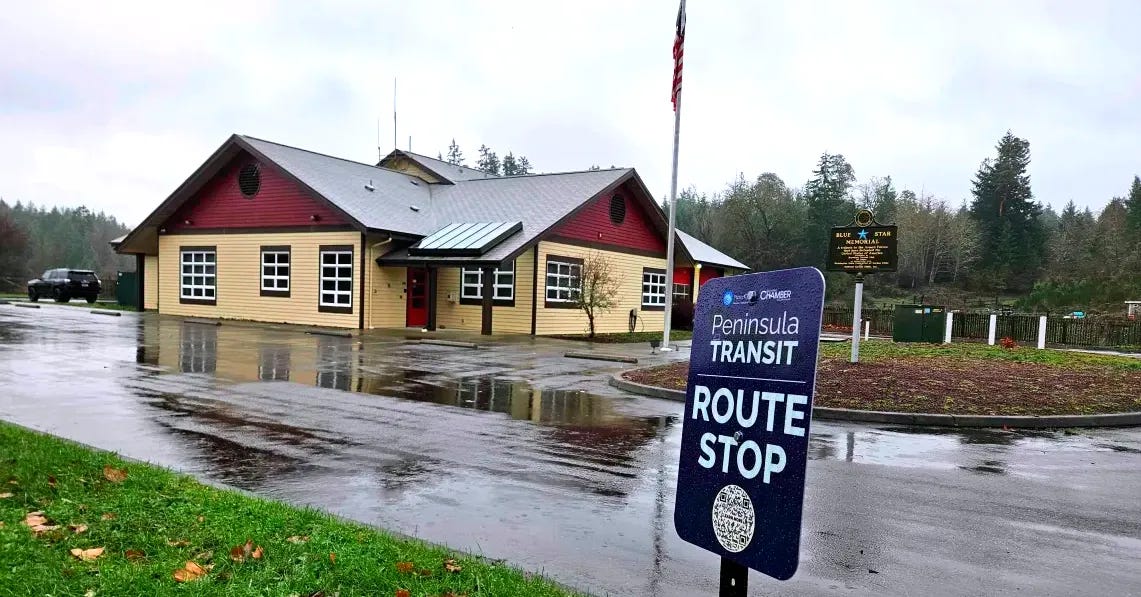
As I turned into the parking lot of the Longbranch Improvement Club, I lowered my music, and the sound of crunching gravel filled my car. This would be my first time getting to ride the bus since it started operating on Black Friday. I looked around the large open field pushing up against the treeline. The community garden on one end, the clubhouse on the other. It was actually only my fourth time ever coming here since moving to the area two years ago. I’d been meaning to come down and get involved, but with the busy nature of work and settling in, the thought came and went. But excuses aside, I told myself today would be different. We had our first break from the rain that’s been flooding out communities across the state. The flooding wasn’t my concern at home; it was more fallen trees and long power outages from the high winds. I was already dealing with so much, now this? What if another tree comes down on the fence? What if–
Stop. I needed a break from all the stress and worry. I cut off the ignition and pulled out my phone, checking the time– I was early. Stepping out of my car, I took a deep breath of cool air. The sun was shining for the first time in days. A perfect balance of warm sunlight filtering through the clouds, and I could see last night’s rain glistening across the grass. It was a beautiful day as ever to get started on my project. I couldn’t ask for a more perfect day this time of year, all things considered. In my research before moving here, I found out two things.
One: There used to be a bus.
Two: Now there isn’t. Well, until recently.
Post-pandemic, I had convinced myself I was burned out on socializing, and my empathy was strained. I mean, why should I care about a bus anyway, I have a car, right? I’ve been getting by without it! And I’m still young. I won’t have to think about having issues until I’m way older. I told myself in frustration when I looked into the confusing history of attempts to secure a regular service route. But since seeing the article about the pilot program coming to the KP, my mind was buzzing with renewed excitement on how impactful it could be to the area. And what of the future? It’s not set in stone. We’ve had car troubles before. My friends and neighbors have too. I will get old. What about our future kids? Well then, it must be settled. I was determined to write this story; the world could do good with less cynicism, and so could I, right? The tales of real people living real lives. The truth of communities that are easily overlooked or taken for granted. These were stories that needed to be told, and like they say, “If you want something done, you’d better do it yourself”, and it had to start somewhere. Parked not too far from me was a woman with sandy-colored hair, looking around the area but not moving much from where she stood. So I decided, if I was going to do this, it needed to be today, and that woman standing over there was going to be the first person I interviewed.
Maybe.
My anxiety crept up as I walked around the other side of my car. “Uh, hello!” I waved at the woman, giving her an awkward smile. “Are you waiting for the bus?” She’s gonna think I’m weird. What if she says no? What if she says yes but doesn’t want to talk to me? I should have rehearsed this. No, I should have just waited in my car.
“Yes, I am!” she replied enthusiastically. The tension faded and I sighed in relief. We both chuckled and introduced ourselves. It turns out she was waiting for the bus too. The woman’s name was Stephanie Warren, and she was part of a transportation research project back in 2023. The Key Peninsula Healthy Community, a 501(c)3 non-profit organization, was in charge of it. Along with being an 8-year resident of Longbranch and wearing many hats, she had a good sense of what was missing in the area. Ask, and you shall receive. I couldn’t believe it! She gave me a rundown of the project and an email to the organization where I could get a copy of the research presentation. It was a candid, open conversation, and it was nice to get the opportunity to speak with someone doing the work. With the stars aligning like this, I had to keep going.
When I looked at the survey results, they helped paint a picture of the reality for many living here with unreliable or limited transportation. Many kids couldn’t socialize or participate in after-school activities. Adults and retirees couldn’t complete necessary errands or commit to a job. And across the board, everyone faced challenges being involved in community activities like volunteer work. Near-daily discussions about road safety for pedestrians, accidents, close calls with cyclists, and aggressive drivers were regularly taking place on and off social media, too. According to recent census data, about 16% of the population on the KP is approaching or in retirement age. 10% are adolescents, with a larger portion being tweens and teens. 18% of those children live below the poverty line. That’s true for 8% of our seniors too. As I read over the data and compared it to my own research of publicly available information, the image couldn’t be clearer. Where local organizations have come together to fill gaps, there’s still more work to be done. I couldn’t deny that what I saw was a need for affordable and accessible public transit in more rural areas like the KP. I mean, the Zillow score is literally 0/100.
This pilot program was able to secure funding through the 2024-25 Pierce County Biennial Budget by Pierce County and WSDOT. The county allocated about $200k each for three rural transportation pilot projects. White River, Spanaway, and Key Peninsula originally submitted proposals to launch their own programs, but only Key Peninsula chose to move forward. Only $5k of the $200k was used for advertising. This year’s budget ($25k) for the Holiday Shuttle was merged with the pilot program, which explains why the Sunday service will not continue past December. As a result of amendments to the 2025 Transportation Budget, the program received an additional $350k. This totaled $575k in funds dedicated to providing transportation to the Key Peninsula for nine months. That’s not even half a percent of our county’s budget.
That’s a lot of math, but it’s important to highlight what it could, and currently, looks like to fund a much-needed resource for the Key Peninsula. What this will look like at the end of the nine months is for the community to decide. Will it stay? Will it be something different? Will another solution appear? Regardless of initial impressions, the resources are here, and riders are already taking advantage of them. They’re already giving feedback. For seven days straight, I rode the bus’s whole route and met other community members who openly shared what the bus has done for them in just a few short weeks. And with their permission, I share some of those stories.
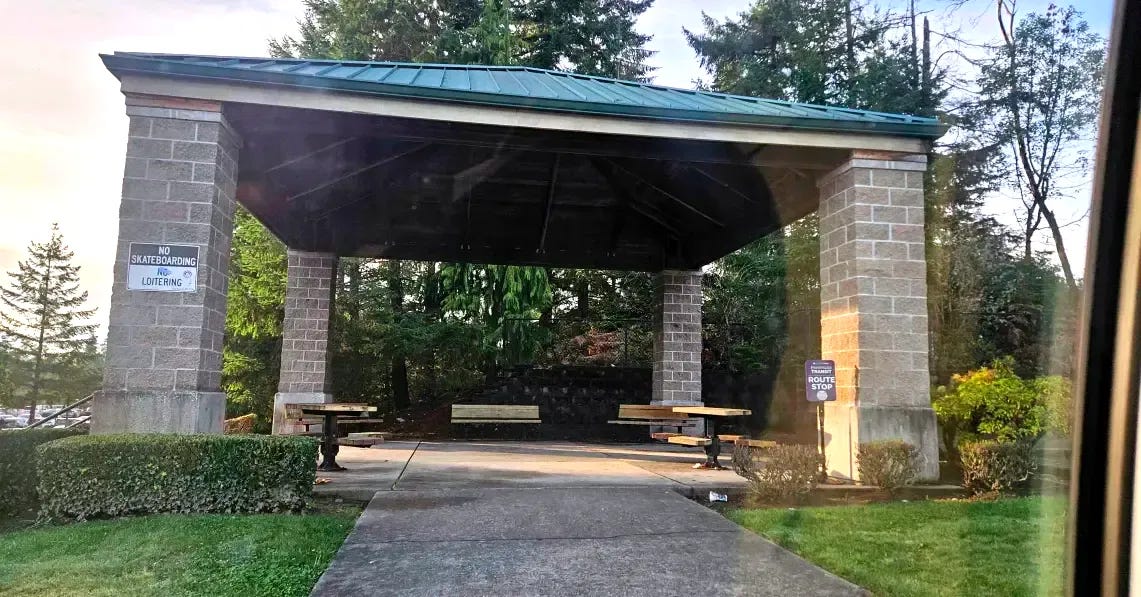
It was a cool, bright, sunny Saturday when the shuttle pulled up to the pavilion in the Safeway parking lot in Gig Harbor. Lindsay and her niece hopped off the bench and shuffled into the bus with a few bags. They were out on a Christmas shopping trip together, dressed in casual, bright clothes that matched their cheerful energy.
As we traveled along, Lindsay spoke of the freedom and opportunities the bus brought her and her loved ones. She said that before the bus came, she needed to rely on the kindness of friends and neighbors to get around. There was a cloud of awkwardness around asking for rides across the Purdy Spit all the time, and she felt troubled about burdening people with such a long commute on her behalf. But shortly after the route started, she and a couple of others took a trip to the Galaxy Theater and enjoyed themselves without worrying that they were intruding on someone else’s free time.
“Now I only have to get a ride to the closest stop to my house.” she noted. She also spoke of a friend who takes the bus. While Lindsay catches a ride to the stop closest to her house, her friend takes the opportunity to take a walk through the neighborhood. I asked her if she could add another stop, what it would be. “Closer to work. It’s close to medical too.” Lindsay works for Superior Register, a family-owned company. A stop at the Key Peninsula Community Health Services would bring her closer to her work, the gym, and medical services. But Lindsay wasn’t just speaking for herself. She talked about how beneficial a stop like that could be for other members of the community.
As we continued along the highway approaching Skansie Brothers Park, she mused about the local shops and her excitement about future trips to the area. In high school, she took a British Literature class where she read Mary Shelley’s Frankenstein, a classic, and searched high and low at nearby bookstores for a copy. It was at Gig Harbor Book Co., where she was able to procure a copy of her own and fell in love with the cozy atmosphere. She told me about the Mexican restaurant, El Pueblito, next door to the bookstore, and said it was her favorite place to eat. She told friends and family about it often enough that it became a regular gathering space amongst them. Listening to Lindsay’s cheerful recounting of past adventures as we traveled along the route filled my heart with glee. We parted ways at the final stop in Uptown Gig Harbor, where she, with her niece in tow, bid farewell and continued about their day in the bustling shopping center.
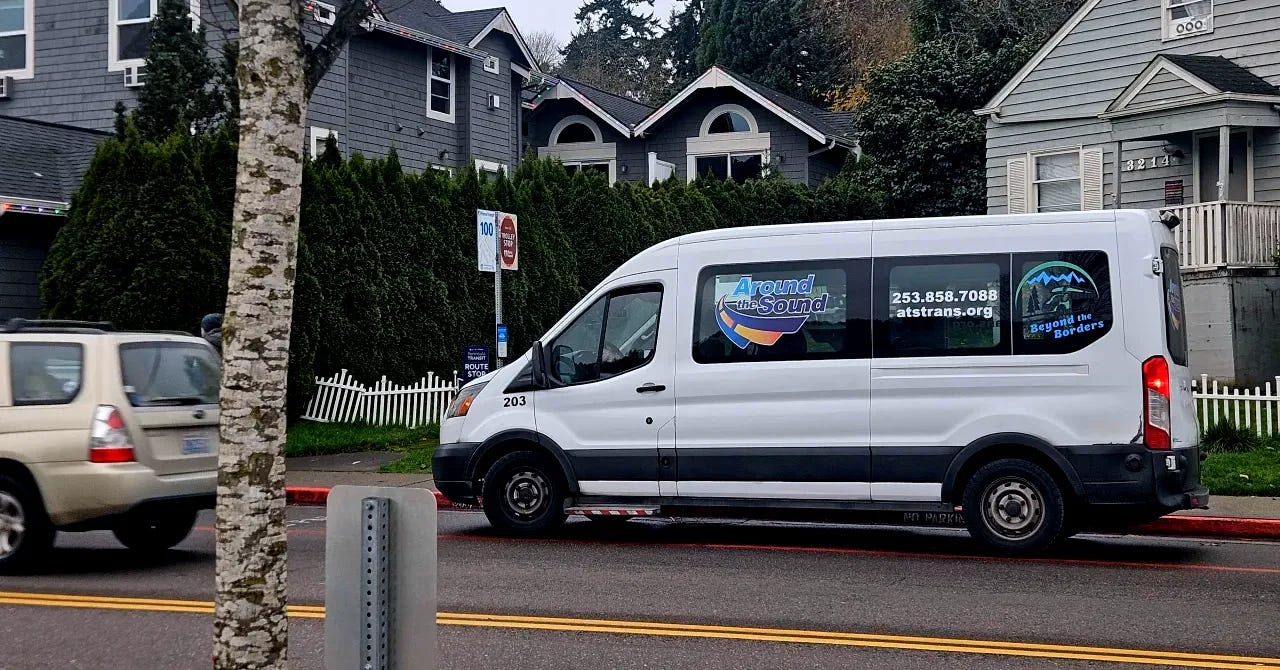
A new face journeyed across the Tacoma Narrows Bridge and visited this quiet community for the first time. Tana, one of the first drivers for the new route along the KP, shares her experience on this new endeavor. After answering an ad she’d seen, she was eventually assigned to drive two of the smaller vehicles. They were passenger vans covered in Around The Sound signs and ADA stickers. Tana was a lovely, calm, and open person. In just a short time, she’d already built a good rapport with the riders she met, and we both shared a little bit about our lives.
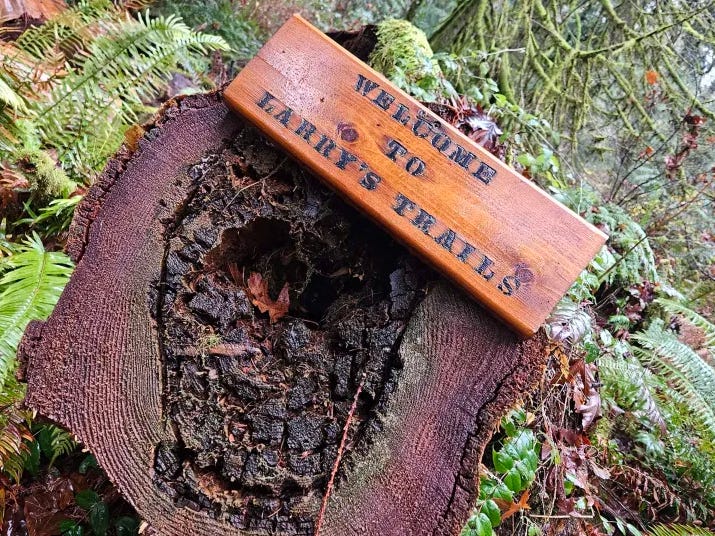
“I walked around those trails down there.” she said, referring to Larry’s Trails at the Longbranch Improvement Club.
“There’s trails over there?” I asked in surprise. I really need to get out more. But it was cool to hear that she spent her break exploring what the KP had to offer.
She pointed out other areas throughout the route that she wished to explore. Tana wants to see what’s at the end of the KP. What would it be like to visit Joemma State Park? What more is hidden behind the trees? She spoke of the mirrored sky on the water early in the morning, driving across the spit. “This was the first time I drove here with the sun out.” she commented as we entered the windy roads of the 302. It was quiet for a moment as we both looked at the road, sunlight filtering through the trees– Mt Rainier peeking out in the distance.
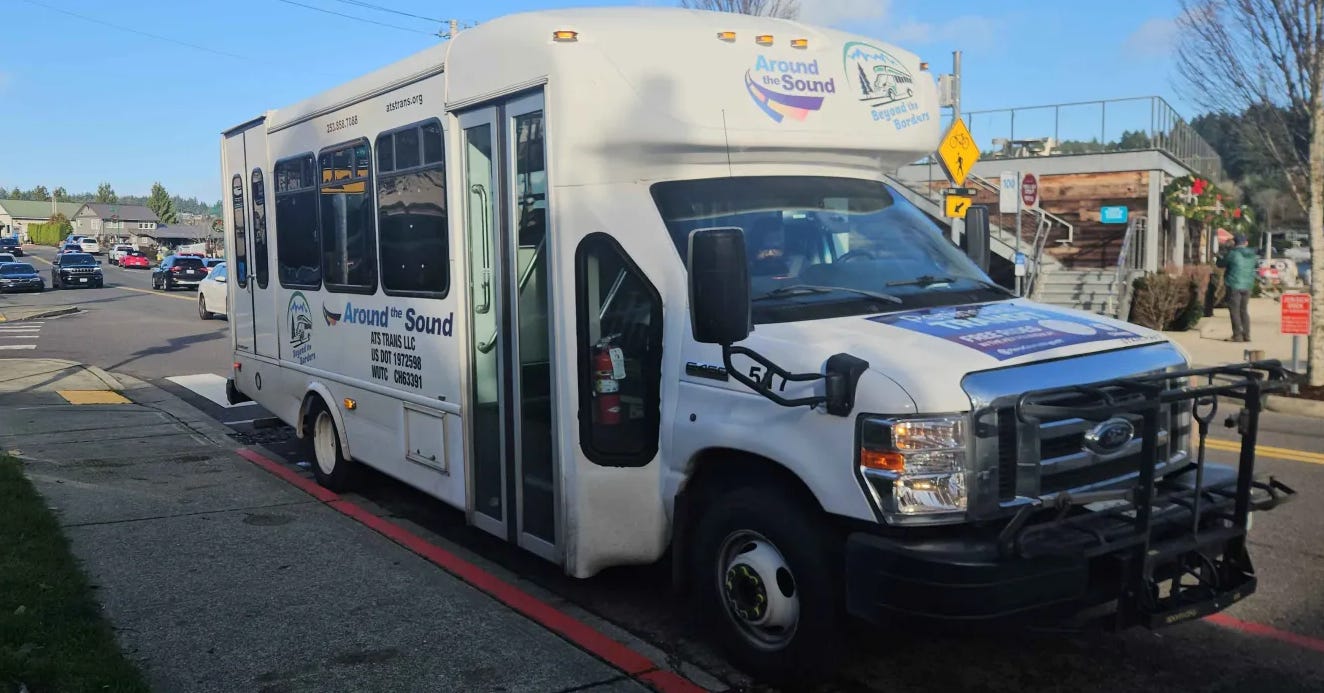
Then there was Wes. A longtime resident of Washington. A Vietnam Veteran who has been driving for Around the Sound for about two years. He was full of jokes and grandfatherly charm. “Are you done asking questions?” he teased.
“I’m still thinking. Do you have any questions for me?” I quipped. We chuckled. But he did ask me questions while I thought of more for him.
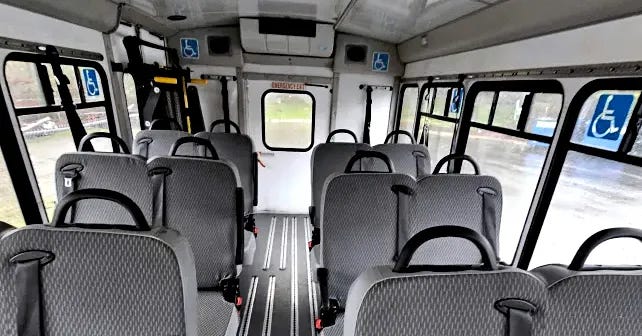
Wes was driving the biggest vehicle on the route. A 12-seater Starcraft model bus. It had two more spaces in the back to strap in wheelchairs for a max capacity of fourteen. Wes talked about how he wants to see more people ride the bus and said he hoped my story would bring more attention to it. “I want to see more riders.” he stated with conviction. I asked how he heard about the opportunity to take up this route. He lives in Gig Harbor and said they offered it as an option because of his experience. Wes was happy to make the change as it was closer to home, and he didn’t have to cross the bridge for work anymore. “I had opportunities to live other places [beside WA]…” he trailed off. “..yeah, I don’t think I’ll leave”.
On the way back, he pointed out a place he’s frequented, Gateway Park, and we both agreed it would be a perfect stop to add. We parted ways back in Key Center, and Wes made sure to give me informational handouts, encouraging me to let the county know what I thought of the bus.
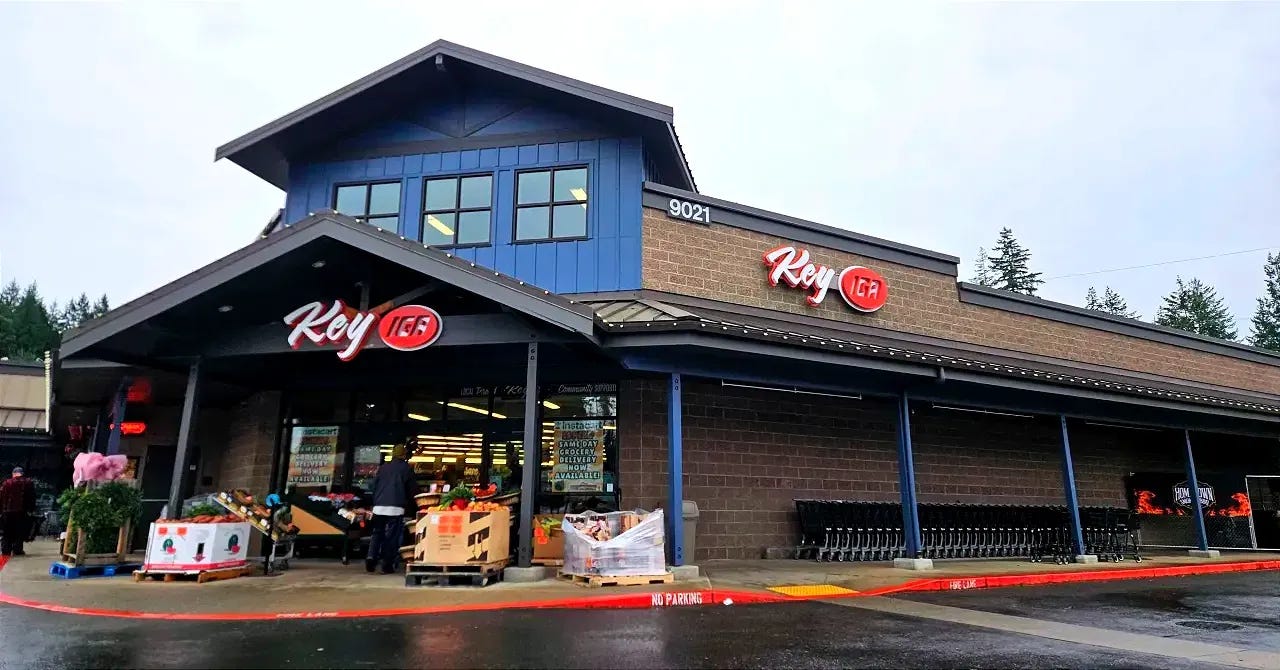
James was the 3rd driver for ATS that I met. A US Navy Veteran, who, after his service, spent a career at the shipyard. He’d retired and was looking for a part-time gig close to home. Working for ATS gave him that flexibility. James grew up in a small town of 700 in Mississippi, so the realities of rural, small-town living weren’t unfamiliar to him. “Being out here reminds me of home.” he said, gesturing out towards the tree-lined roads. “I got some of the best brisket I’ve ever had at that little store [Key IGA].” he reminisced, almost in disbelief at his own words. “So you know what my wife said? ‘You know you’re gonna have to take me over there!’” he laughed, playfully imitating his wife’s insistent tone.
This wasn’t James’ first time on the KP though. He said he had driven a similar-sized shuttle picking up high school kids out in Lakebay. Once he worked a 4-hour shift for a wedding party at Joemma. We spoke about the impact a bus service like this would have on the community, especially for those, like him, who grew up without a car. “It’s the same today…you want a good job to support your family; you’re gonna have to travel out 30-45 minutes.” He said his usual option back in the day was to walk.
We also talked about the impact on seniors. As we pulled into the Key Peninsula Community Services, he mentioned a group of about ten, who hopped on with Councilmember Robyn Denson. “Driving is intimidating, creates anxiety.” he answered when I asked what those seniors shared with him that day. “They’d love a shuttle. To not have to worry about driving, red lights…just enjoy shopping without stress.” He said it was important.
“What do you think the pros and cons of the bus would be here?” I asked him as we carried along.
After speaking of the pros he continued, “I don’t really call it a con. But it’s gonna take time for people to trust [the bus]. Once they see it’s here, and people are taking it, I think we’ll have more riders.” And James was right. The community had been burned enough times that the idea of reliable transportation had been written off by many. There was also a lot of debate about how to fund it. The community needs consistency, though, and James agreed that this bus could provide that.
On a rainy Monday afternoon, the Starcraft model bus pulled into the Purdy Park-and-Ride. Next to the blue “Peninsula TRANSIT” sign stood a woman in a bright pink raincoat, phone clutched in her hand, squinting through the December drizzle. She looked up and down the bus, paused for a moment, then approached the driver’s side, where Wes rolled down the window. “Is this the Purdy bus…?” she asked apprehensively.
Wes gave her a brief rundown of the route and asked if she wanted to hop in. She enthusiastically boarded, the unsure look on her face now completely awash with glee. This was Renee, another community member who did most of her commuting between Kitsap County and Tacoma. She’d heard about the bus from the Community Council and was looking forward to a chance to ride it and see its whole route. “We live separated.” she lamented, explaining the limitations of transportation on the Key Peninsula.
A slight frown would peek through her excitement as she commented on the difficulties of being isolated from others. “What I love about a bus ride…you can talk to people.” As she snapped photos of the route, she talked about how she’d find herself on this side of the Tacoma Narrows without anything to do before her next task. Her car is older, and she has concerns about just taking it out for leisure and hopping from one parking lot to the next. With the cost of gas, poor cell reception on the KP, and a lot of the surrounding area hidden behind trees, it’s hard to take chances. It’s hard to visit friends. It’s hard to stay connected.
Renee didn’t let the past get her down though, and her radiant smile returned when she spoke about her points A and B.
Point A: The bus will help connect all the community spaces central to the area and its residents. She said that with the bus stopping at the park-and-ride, the reality of a connected county was possible. Not just Pierce, but Kitsap too. She spoke of friends in the area and the desire to journey up and down the highways to explore her community with fewer barriers.
Point B: People can get around a rural area while keeping it rural. There’d be fewer cars driving around, less spent on gas, more people shopping local, and more people making memories together on the route to their next stop.
She could imagine a reality where, had the bus been there before, her friend’s kids could spend time at The Red Barn Youth Center without worry of how they’d get back into town. It didn’t need to cost an arm and a leg or require complex scheduling among various parties. It just needed people looking for a place to go and knowing there was reliable transit to get them there. As we parted ways, she moved seats to get in a better spot to continue her conversation with Wes.
There was one more person I met briefly, but who had made an impression on all of the drivers. He didn’t want his name shared, but said I could share his story. Listening to it made an impact on me too. It was on one of those rainy winter mornings that I ran into a man I would soon discover I’d seen many times before. In fact, I noticed him on many rainy days. “I bike fourteen miles just to catch the bus. It takes me about two hours to get to the Park ‘n’ Ride. ” he told me, adjusting in his seat.
“Fourteen miles?!” I said in disbelief. He sighed in frustration as he nodded his head.
“Yeah, I don’t understand why Pierce Transit pulled out. You know people needed that bus.” He told me he’d been riding it every day since service started up at the end of November. He was back home with his parents for a while, but still had a support network outside the KP that he relied on. The rains were rolling in, days grew shorter, and the highway wasn’t any safer. Yet, on a regular basis, I noticed this man going up and down the 302. If he didn’t ride his bike, he told me, he’d have to try to find a ride or hitchhike to get around. He wasn’t the only one though that I’d notice walking up and down the highway. Hopefully, the bus can be a benefit for them too.
So is it worth it? To that I say, use it while you’ve got it. Make up your own opinion for yourself. I certainly see the benefits. It doesn’t take much beyond asking good-faith questions, being willing to listen to criticism, and coming together on a solution. Nothing is free, nor is it guaranteed, but together we can improve. I want to improve.
I spent the last week riding the new KP bus route and exploring what adventures await at each stop. It’s easy to forget what exists beyond your neighborhood and settle on wasting the day away at home when the work is done or when the weekend finally arrives. However, our great state has so much to offer; that certainly means our community and its surrounding areas do as well. From now through August 2026, journey along with me as I adventure out and meet members of our community, cover local events, explore small businesses, and highlight resources. Here is where you’ll find stories from people like you and show just how connected our community can be. If you catch me on the bus or out and about, feel free to spark a conversation and share what you love about the place you call home.
More Related Articles
Pierce County Document Center Proposition 1 (2012)
Pierce Transit: Gig Harbor trolley is coming back, but no service for Key Peninsula yet (Feb 2021)
Pierce County offers holiday shuttle connecting Key Peninsula, Gig Harbor (Nov 2023)
Pierce Transit tax loses by 704 votes; Fire Distric tax wins by 1 vote (Nov 2012)
Election Results Certified; Pierce Transit Tax Increase Fails (Nov 2012)